What proportion actually means
Ask most rabbit or guinea pig keepers how much hay their animal eats, and the answer tends to gesture at a corner of the enclosure: a rack, a handful, something topped up now and then. That mental model — hay as ambient furnishing, pellets as the real food — is the single most common way to underfeed both species.
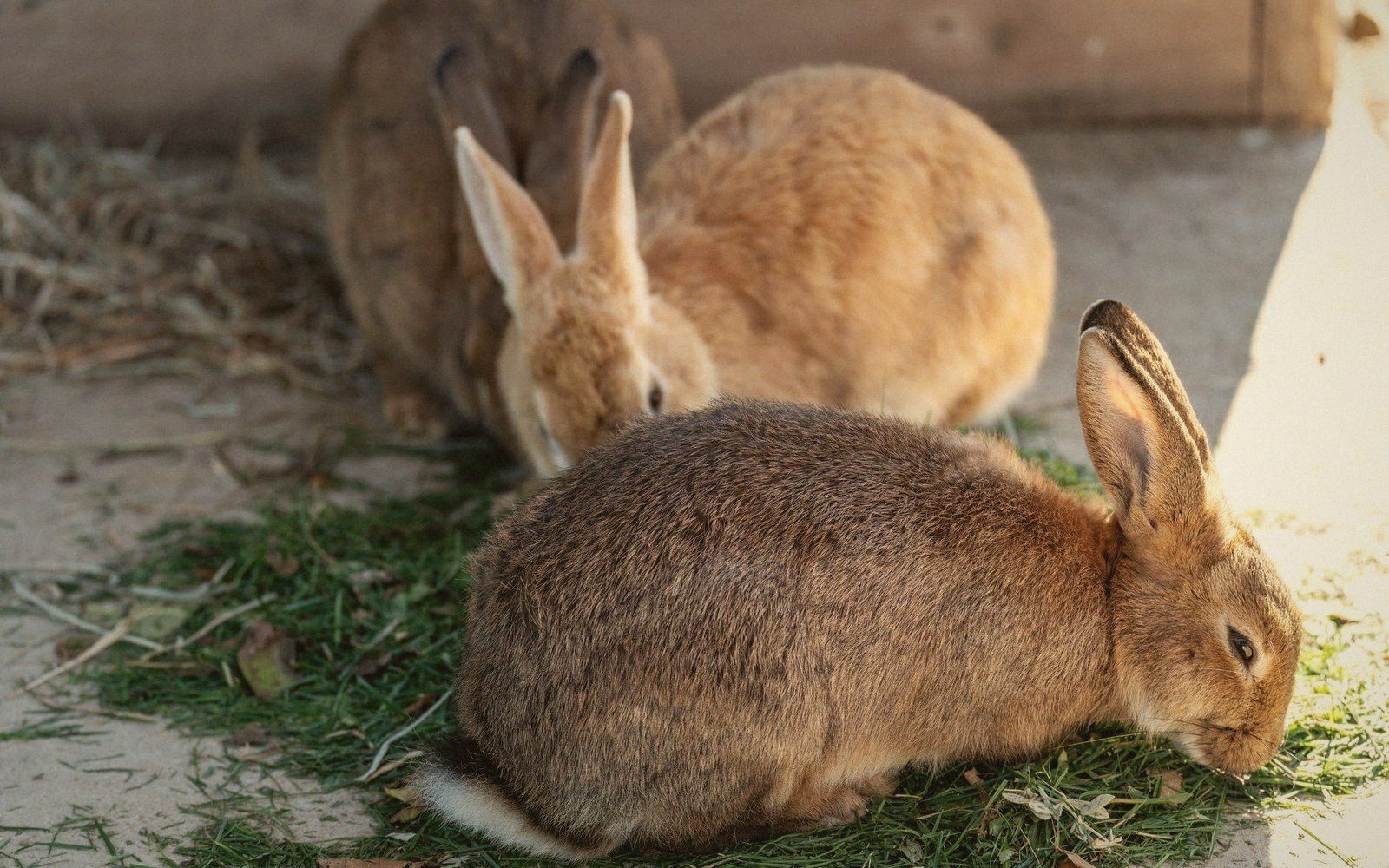
The target is not a measurement so much as a ratio. A rabbit's daily hay intake should equal, by volume, roughly the size of its own body. A guinea pig's is proportionally similar. Neither of these is a figure you reach by topping up a small rack. It is a figure you reach when hay is genuinely available in bulk, at all times, and the animal is working through it continuously — because continuous chewing is the whole point. The teeth of both species grow throughout life and are worn down almost entirely by the lateral grinding motion that comes from processing long-stem fibre. Pellets, vegetables and fruit do not replicate that motion in any useful quantity. Hay does.
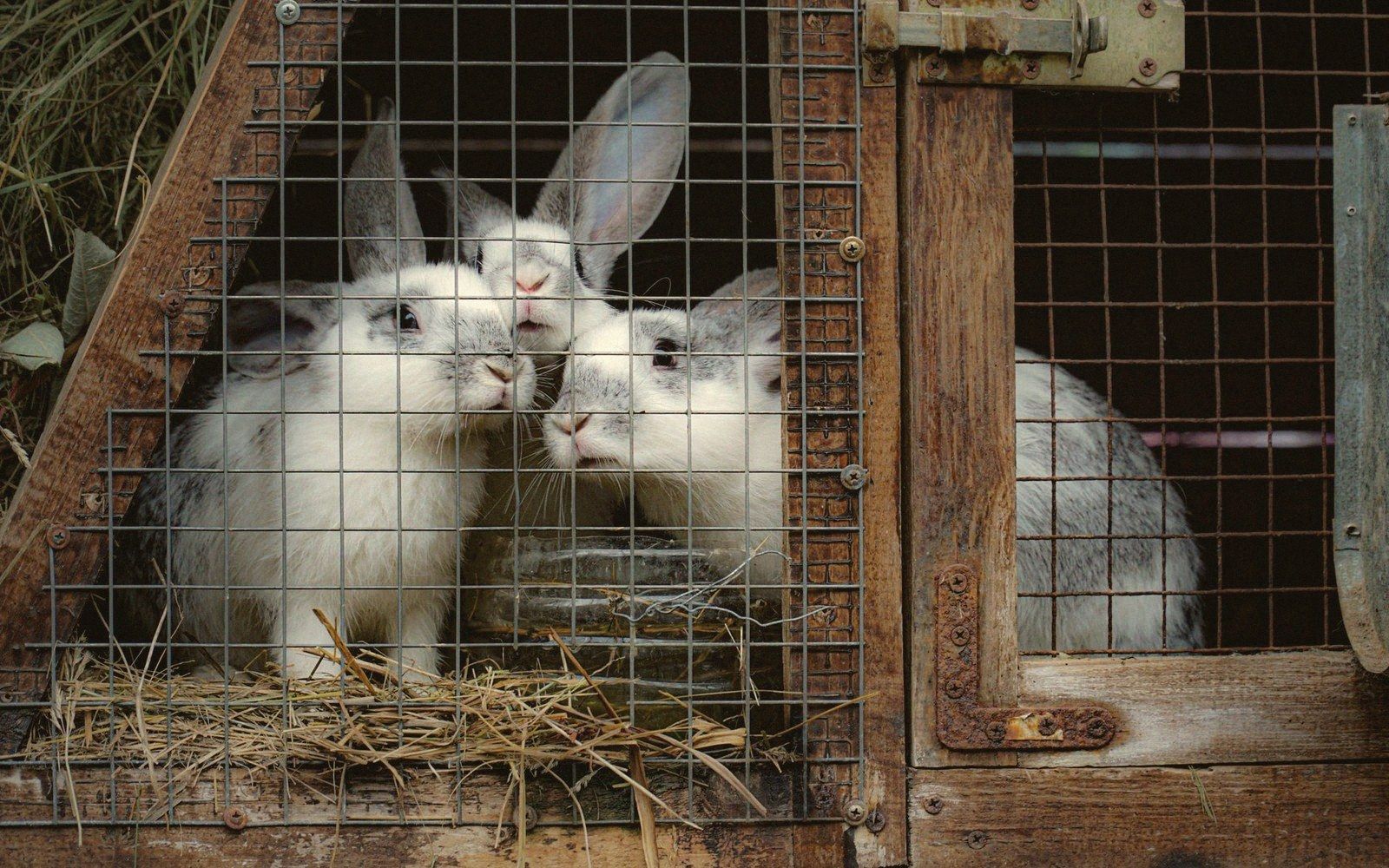
The right way to think about it: if an animal is eating a meaningful number of pellets, it is eating fewer than the right amount of hay. Pellets in a rabbit's diet are a small supplement, not a staple — and for many adult rabbits kept with good hay access, they can be reduced considerably. Guinea pigs need slightly more dietary variety because they cannot synthesise vitamin C, so fresh leafy greens earn their place, but hay still constitutes the vast bulk of the diet by weight and by time spent eating.
The practical setup
Quantity follows from access, and access follows from where you put the hay and how much of it is there at once. A small wall-mounted rack that holds a tennis-ball-sized portion is not adequate for a rabbit; it is closer to a garnish. The container — rack, box, corner basket, loose pile on the enclosure floor — needs to hold enough that the animal can bury its face in it and still not reach the bottom. Many keepers find that simply putting a large pile directly on clean substrate, refreshed twice daily, is more effective than any rack. The animal can forage through it, drag it around and nest in it; all of that movement is additional benefit.
Freshness matters independently of quantity. Hay that has been sitting in a damp corner loses palatability quickly, and an animal that finds its hay stale will eat less of it without any visible sign of rejection — it simply grazes elsewhere. Smell it yourself: good hay is dry, faintly sweet and slightly dusty in a clean way. Hay that smells of mould or damp earth goes out. Storage should be somewhere dry and ventilated; a large fabric or mesh bag in a cool space keeps it better than a plastic bin, which traps moisture.
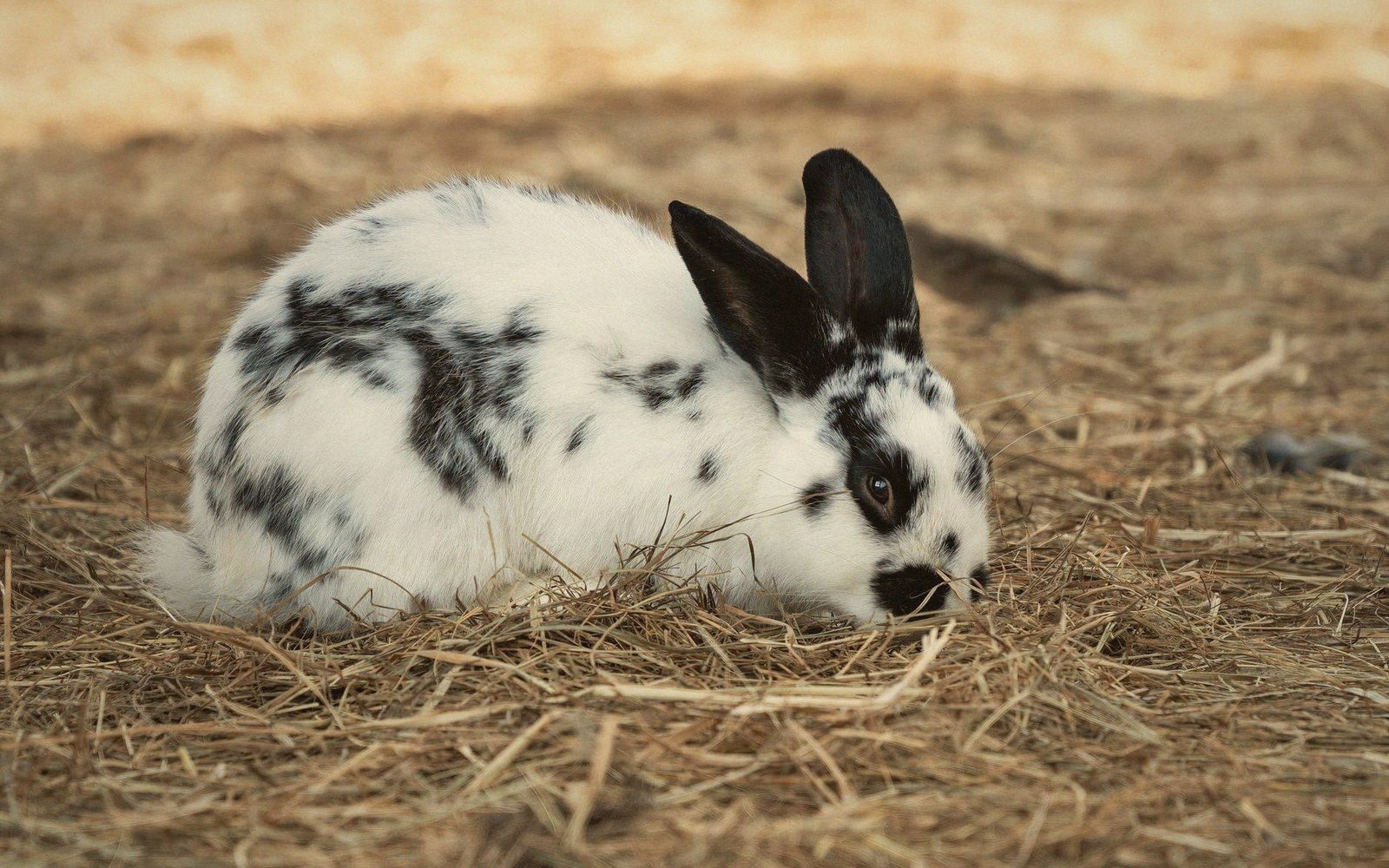
Brushing a rabbit after heavy hay use is worth scheduling — long-haired breeds in particular collect a great deal of plant material in their coats, and the same fibrous diet that is essential for gut health will, in an impacted hairball, cause serious problems. That is a question for a vet; the brushing is yours to keep up with.
The types, briefly
Timothy hay suits adult rabbits and guinea pigs as the everyday staple: moderate protein, good fibre length, widely available. Meadow hay is softer and more varied in plant species, which some animals prefer, and works well as an alternative or mixed in alongside. Orchard grass is another palatable option with a slightly sweeter smell that can tempt reluctant hay eaters. Alfalfa (lucerne) is high in calcium and protein — appropriate for young, growing animals and nursing mothers, but too rich as a daily diet for healthy adults.
What you are looking for in any hay: long stems rather than short chopped pieces, a green-to-gold colour (very brown suggests old stock), and that dry, clean smell. Dust is normal; mould is not.
If an animal is ignoring a full hay supply, that question belongs to a vet rather than a husbandry guide. Appetite changes in rabbits and guinea pigs carry weight, and hay refusal is not a feeding problem to troubleshoot at home.
Proportions at a glance
- Body-sized volume daily
- the rough daily hay target for an adult rabbit by volume
- Pellets
- a small supplement, not a staple, for adult rabbits with good hay access
- Alfalfa
- higher calcium and protein; right for juveniles and nursing mothers, not routine adult feed
- Timothy, meadow hay, orchard grass
- the three everyday options for adults; all interchangeable or mixable
Storage quick check
- Container
- fabric or mesh bag preferred over plastic; plastic traps moisture
- Smell test
- dry, faintly sweet, slightly dusty = good; damp or musty = discard
- Freshness
- refresh piles twice daily; stale hay is refused quietly, not obviously
EVBB is an independent publication about routine animal husbandry. It is not a veterinary service and offers no medical advice. For any health concern, consult a qualified veterinarian.