Weighing food instead of scooping it
A scoop measures volume. Food is sold by weight. A kitchen scale is the only way to close that gap.
Why the scoop lies to you
Pick up a level scoop of kibble, then a level scoop of a denser, smaller-pellet food. They look identical. They are not. Density varies between formulations, between brands, and even between bags of the same product if the kibble size has changed. Many manufacturers' feeding guides give weights in grams or ounces, because a scoop is an unreliable unit. When you feed by volume, you are working in a different language from the label.
The error accumulates quietly. A ten-percent daily overestimate does not show up in a week; over months it becomes a body-condition problem your vet will name before you do. Underfeeding is less common but just as invisible: a cat losing condition on what looks like a generous bowl is easy to miss when nobody knows what "generous" actually weighs.
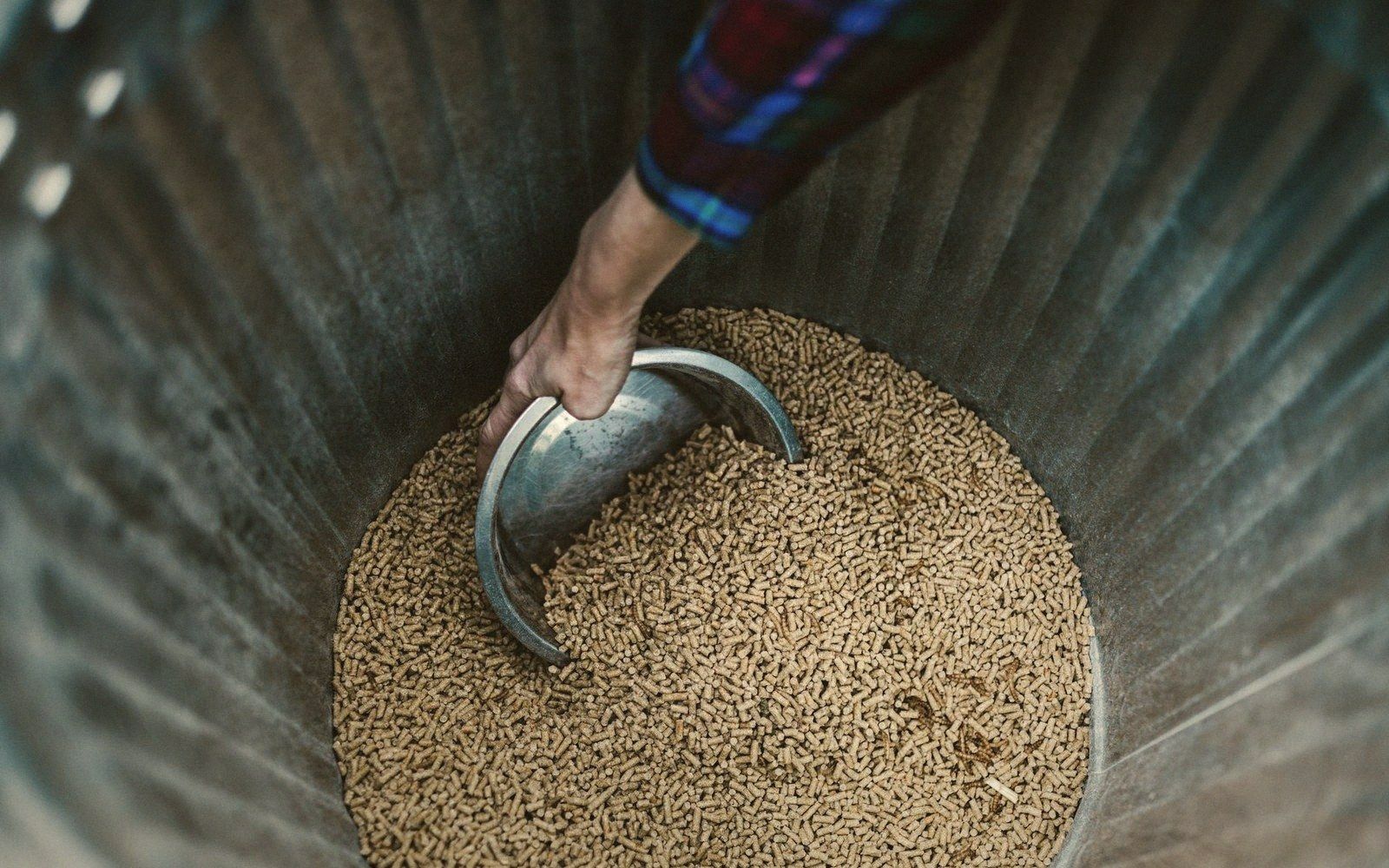
The same problem applies across species. Guinea pig pellets, parrot seed mix, ferret kibble, rabbit concentrate — every one of them has a recommended daily weight, and every one of them can be scooped over or under that weight by a meaningful margin depending on how the pieces settle, how dry the batch is, and whether you are in a hurry.
One scale, used properly, fixes all of it
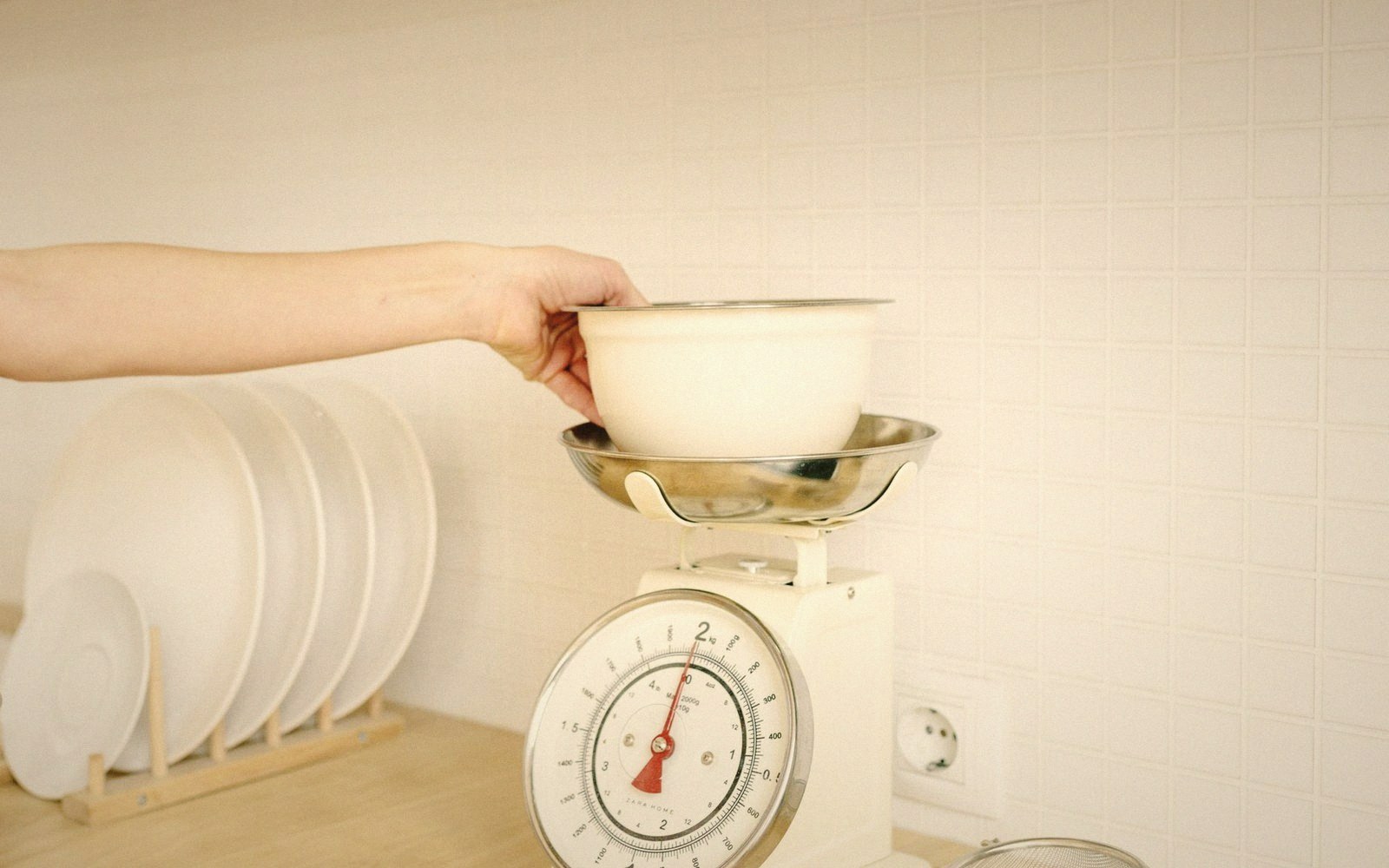
A basic kitchen scale with a one-gram resolution costs very little and lasts years. You do not need a dedicated pet-food scale; the one you use for cooking is exactly right. Set the bowl on it, tare to zero, pour or scoop until the display reads the target, done. The whole operation adds perhaps five seconds to feeding time.
The habit is worth building carefully at the start. Read the feeding guide for your animal's current weight — not the weight you hope they will reach — and note the number. Then weigh every meal for two weeks without exception. After that period the amount looks right to your eye and you can occasionally spot-check rather than weigh religiously, though the scale remains the arbiter when something looks off.
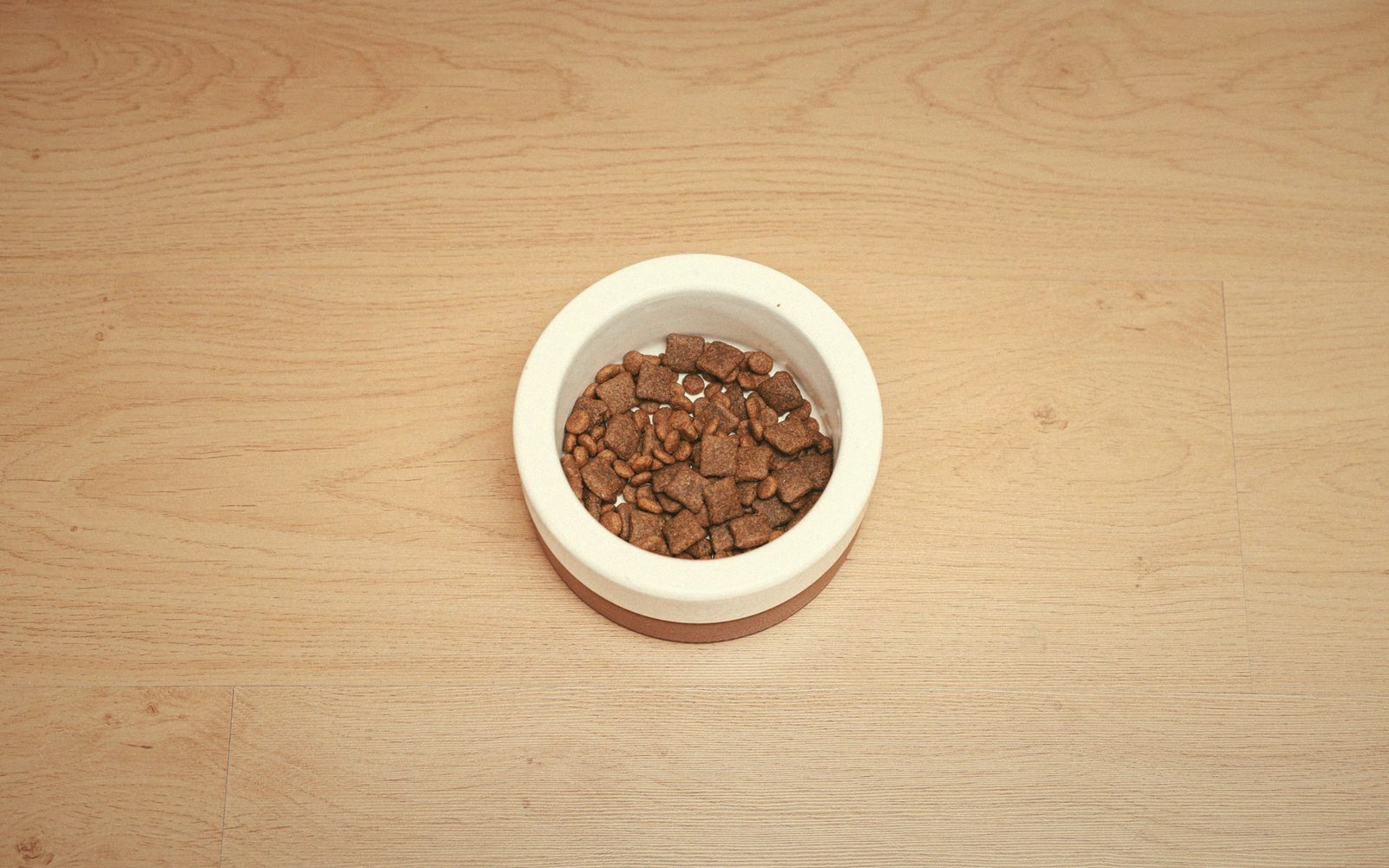
For free feeding, weighing does not replace the topping-up approach, but it does allow you to measure what goes in over twenty-four hours, which is the only way to know whether intake has changed. Weigh what you add each time; keep a loose running total. A sudden drop in daily consumption is the kind of signal that earns a vet conversation.
When food changes, the weight changes first
Transition periods — switching brands, moving to a senior formula, adjusting a portion after a weigh-in at the vet — are where scooping fails hardest. Two foods in the bowl at once, mixed in a specific ratio, cannot be managed by volume at all if they differ in pellet size or density. A scale makes the ratio exact and reproducible from day one.
The same logic applies when you are measuring a daily ration across multiple meals. Dividing a weighed total in half is simple arithmetic. Dividing a scooped portion into two equal halves by eye is guesswork, and the first meal of the day tends to be larger than the second because nobody is paying close attention before coffee.
A scale also removes the gradual drift that comes with a worn or differently-shaped scoop, a different person doing the feeding, or a new bag with a slightly different piece size. The number on the display does not drift. Everything else does.
The core method
- Tare the bowl on the scale before pouring
- this is the step most people skip and the one that matters most
- One-gram resolution is sufficient; finer is unnecessary
- Weigh every meal for two weeks to train the eye, then spot-check
EVBB is an independent publication covering routine animal husbandry. It is not a veterinary service and offers no medical advice.