What actually comes out of a double coat
The outer layer sheds water. The inner layer sheds everywhere. Knowing which you're dealing with changes how you groom and why you'd never touch the top coat with clippers.
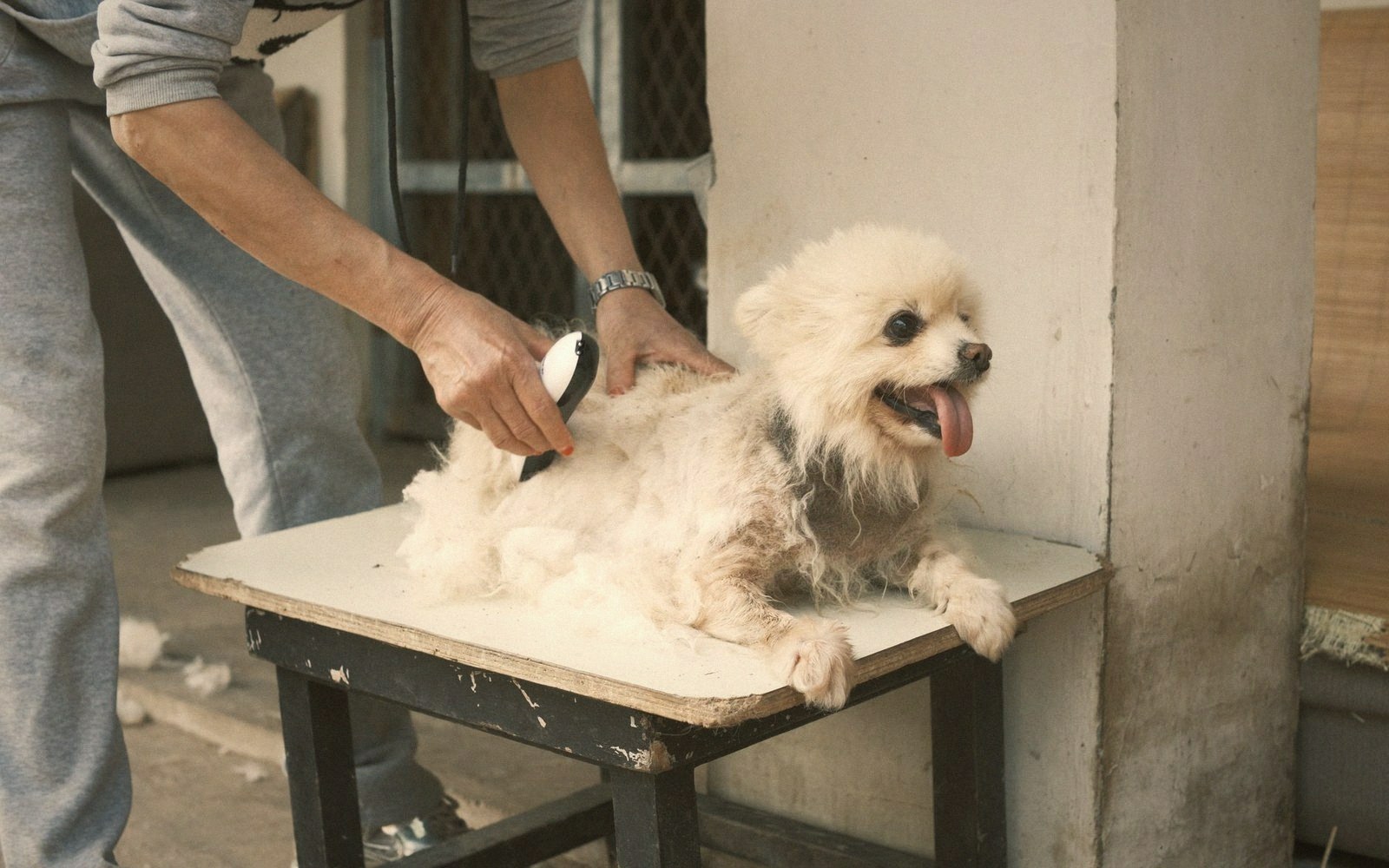
Two coats, two jobs, one messy season
A double coat is not simply thick fur. It is two structurally different layers working in parallel. The guard hairs — the outer coat — are long, relatively coarse, and slightly water-repellent. They form a physical barrier: rain beads, mud dries and brushes off, UV radiation is partially blocked. Below them, packed far more densely against the skin, sits the undercoat: short, fine, crimped fibres whose whole function is to trap a layer of still air. Still air insulates. In cold weather, that trapped layer keeps warmth in; in hot weather, the same mechanism keeps radiant heat out. The outer coat keeps the undercoat dry enough to do its job.
This matters for grooming because the two layers behave completely differently across the year. Guard hairs shed slowly and continuously, and the loss is barely noticeable. The undercoat does something different: it blows. Twice a year, typically as day length shifts in spring and again in autumn, the undercoat releases in volume. The trigger is photoperiod — changing light, not temperature — which is why a dog kept indoors under artificial lighting often blows coat at a slightly unpredictable time, or seems to shed mildly year-round rather than in two clean pulses. The volume, when it finally comes, surprises almost every owner the first time: dense, cohesive clumps of fibre that seem physically impossible given the size of the animal.
What the job actually is
The grooming task during a blow is not brushing in any decorative sense. It is extraction. The dead undercoat has already detached from the follicle, but it hasn't gone anywhere, because the guard hairs above it are holding it in place like a mesh. Left there, it compresses against the skin, traps moisture and begins to mat. Mats close off airflow entirely, which defeats the insulating mechanism and creates a warm, damp microenvironment against the skin that is bad for coat condition. The job is to get the dead fibre out before that happens.
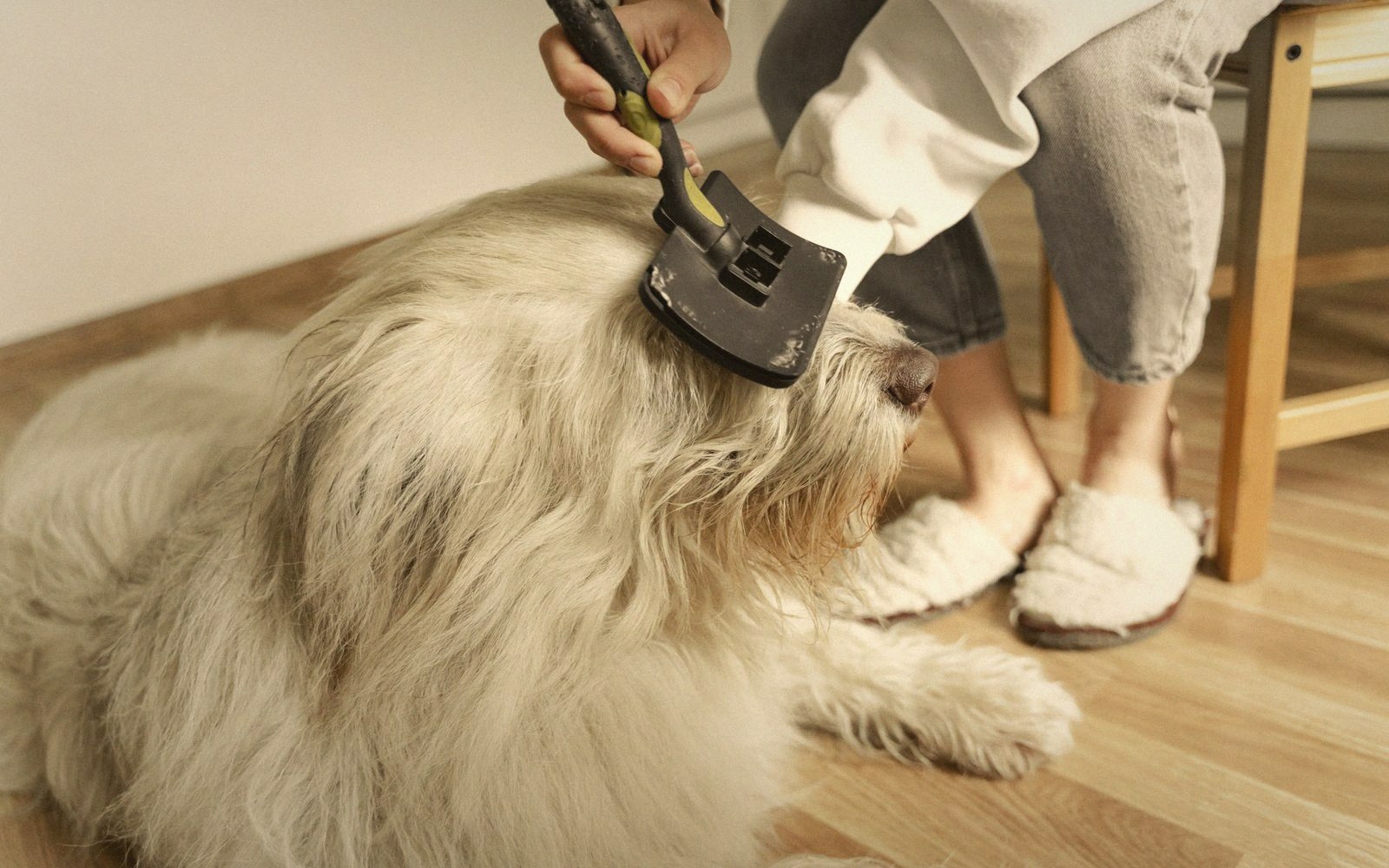
The right tool for this is an undercoat rake or a deshedding tool with tines long enough to reach past the guard hairs — not a slicker brush, which works the surface and misses most of what needs to come out. Slicker, undercoat rake, pin brush and comb all claim the same task, and the distinction between them matters more on a double coat than on almost any other type. Work in sections, pulling the tool through in the direction of growth, and judge progress by what is coming out rather than by how much time has passed. During a heavy blow, the session is finished when the rake moves through cleanly and stops producing fibre, not when a fixed number of minutes is up. On a large breed in full blow that can take considerably longer than most owners budget for.
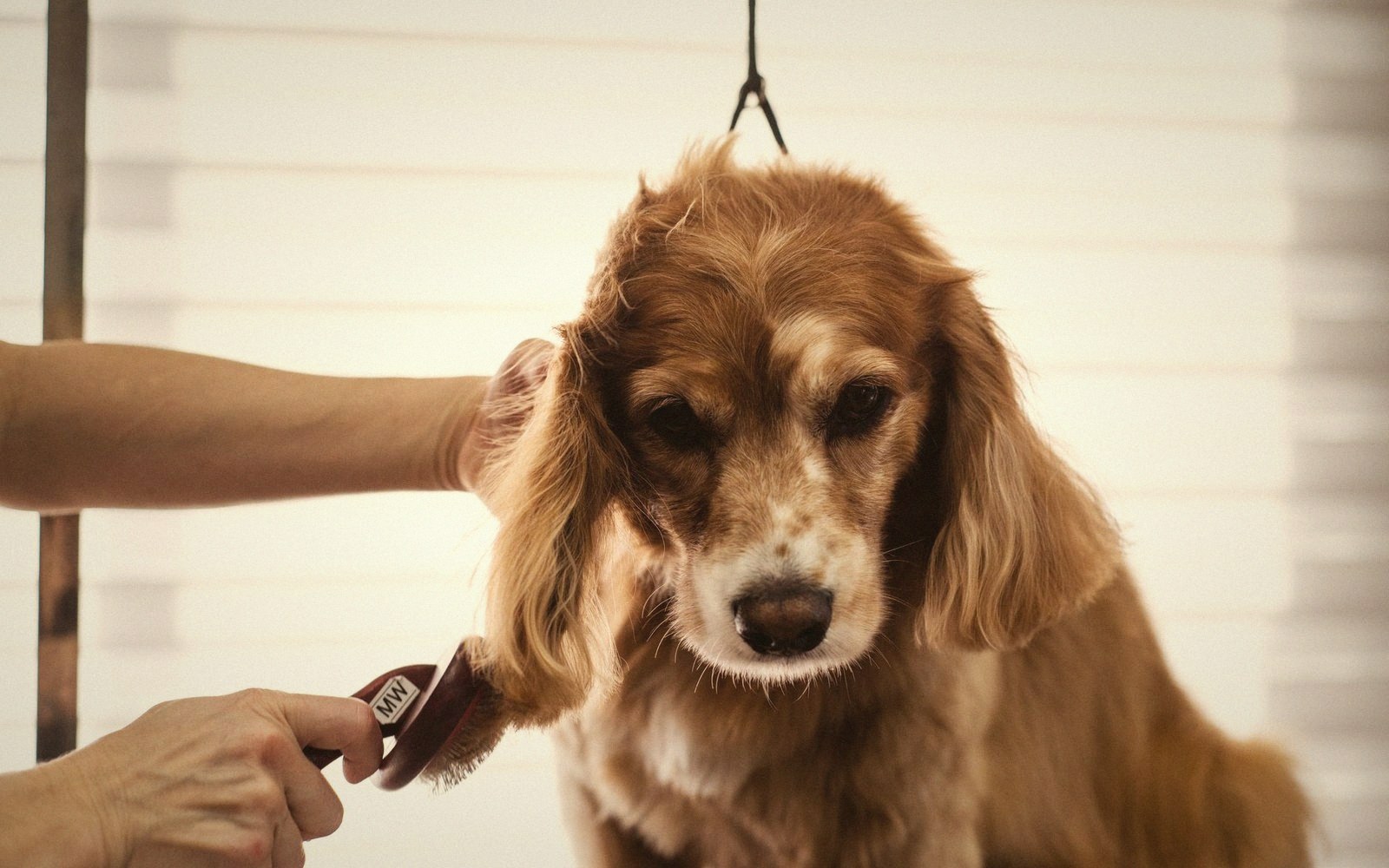
Frequency during the blow should be high — daily or every other day keeps the dead coat from compressing — then drops back to a maintenance schedule once the blow is done. Between blows, a weekly session to work through the outer coat and catch any undercoat that is starting to loosen is usually sufficient, though coat type, age and individual variation all shift that baseline.
The underside and areas where limbs meet the body mat first: armpits, groin, behind the ears, under the collar. These spots need attention before the broader coat, because mats form faster where fabric or movement causes repeated compression.
Why the clippers make it worse
The logic seems sound at first: if the problem is too much coat, remove the coat. It doesn't work that way, and the reason sits in the architecture of the two layers.
Guard hairs grow from follicles designed to produce that specific fibre — relatively slow-growing, coarse, UV-resistant. When you clip the outer coat, you cut guard hairs mid-shaft. The regrowth is blunt rather than tapered, and the fibres that regrow do not always return in the same texture or proportion. On some dogs this resolves over a cycle or two; on others the guard coat comes back softer, denser and more prone to tangling with the undercoat it was previously keeping separated. The functional distinction between the two layers degrades. What you are left with is a single, mixed layer that mats faster than the original double coat ever did, sheds at the same rate or worse, and has lost the water-repellent property that made the outer coat worth having.
The insulation argument also runs backward. The instinct is that a shaved dog must be cooler in summer. In practice, the intact double coat acts as a thermal buffer: guard hairs reflect radiant heat, and the undercoat — as long as it is well-groomed and free of compacted dead fibre — maintains the still-air layer that slows heat transfer from outside to skin. A shaved dog loses the reflective layer and gains direct solar exposure to skin that is rarely pigmented for that purpose. Veterinary dermatologists have a name for the regrowth dysfunction — post-clipping alopecia — but the simpler point is that the coat is a system, and the system works better intact.
The right response to a heavy blow is not to reduce the coat but to get the dead undercoat out efficiently and regularly. A dog on top of its grooming schedule during the blow will shed less into the house than one that is groomed infrequently, because loose fibre removed during a session is fibre that doesn't drift off the dog later. The grooming is the management, not a cosmetic extra on top of it.
One practical note: if the coat has already compressed into mats before grooming catches up, the mats must be worked out from the tips inward rather than raked through from the base — pulling at a mat from the skin side is uncomfortable and breaks the very guard hairs you want to preserve. A detangling spray used sparingly on the mat before working it apart gives the fibres enough slip to separate without force. The session takes longer, but the coat comes through it intact.
How the two layers differ
- Guard hairs
- coarse, tapered, water-repellent outer coat; sheds slowly year-round
- Undercoat
- short, fine, crimped fibres; traps still air for insulation; blows out seasonally
- Photoperiod (changing day length)
- the trigger for a seasonal blow, not temperature
What drives the blow-out cycle
- Spring blowtypically the heavier of the two, as the winter undercoat releases
- Autumn blowlighter; winter coat coming in as summer undercoat exits
- Indoor lightingcan disrupt timing, producing a muted or year-round shed rather than two clean pulses
EVBB is an independent publication about routine animal husbandry. It is not a veterinary service and offers no medical advice. For any health concern, consult a qualified veterinarian.