Four tools, one job
The slicker, the undercoat rake, the pin brush and the comb all claim to groom your dog. One of them reaches the layer that is actually shedding.
What each tool is actually doing
Open any pet shop aisle and the four standard brushing tools sit in a row looking functionally identical. They are not. Each one contacts a different depth of coat, and buying the most expensive one does not compensate for picking the wrong one.
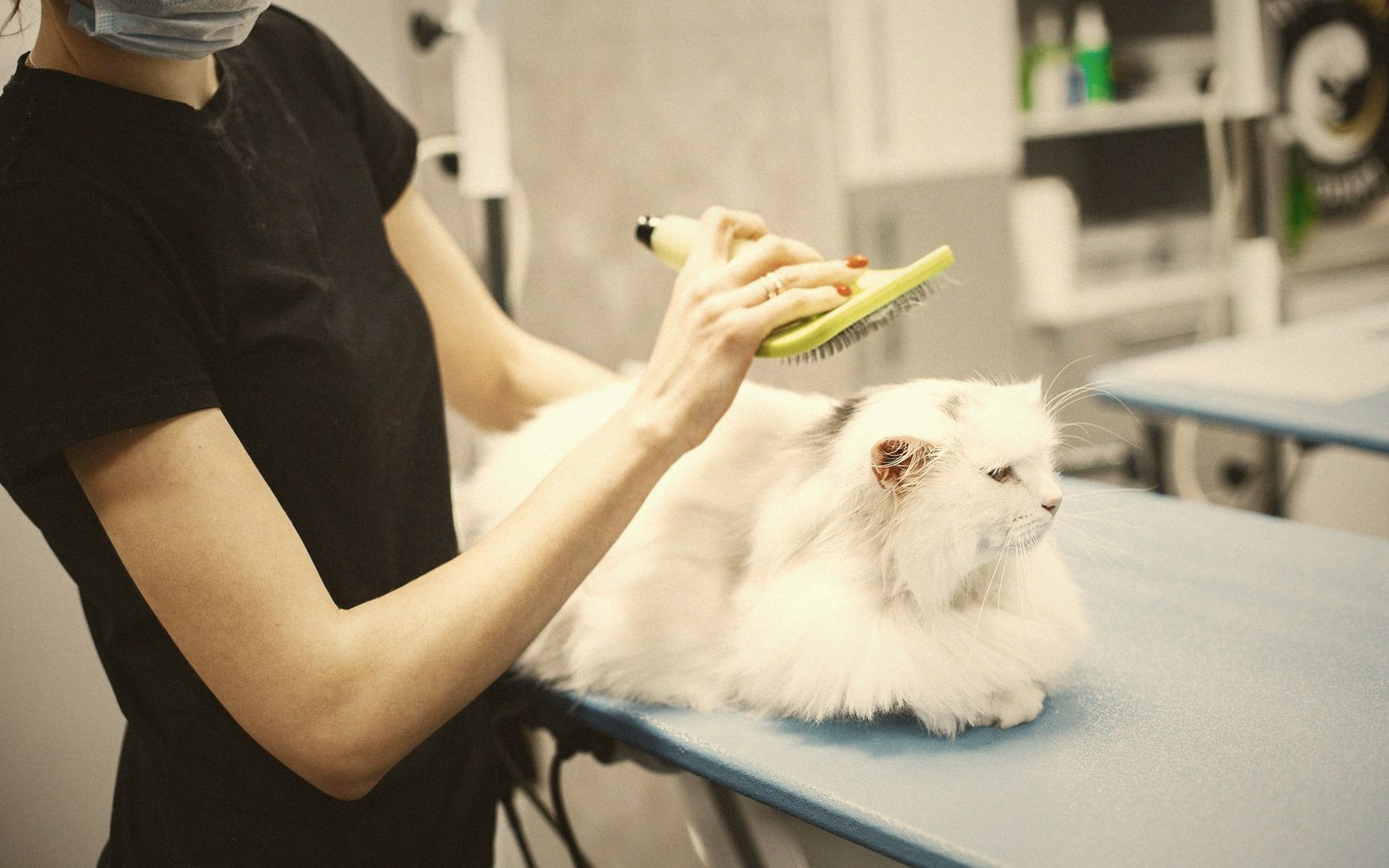
The slicker — that flat, rectangular pad covered in fine, angled wire pins — works at the surface. It catches loose hair that has already detached and migrated to the outer layer, teases out tangles in single-coat breeds, and smooths as it goes. On a short-coated dog or a single coat like a Maltese or Bichon, the slicker is doing real work. On a double-coated Husky or Golden Retriever in a spring moult, it is harvesting what has already escaped, not what is actively releasing below.
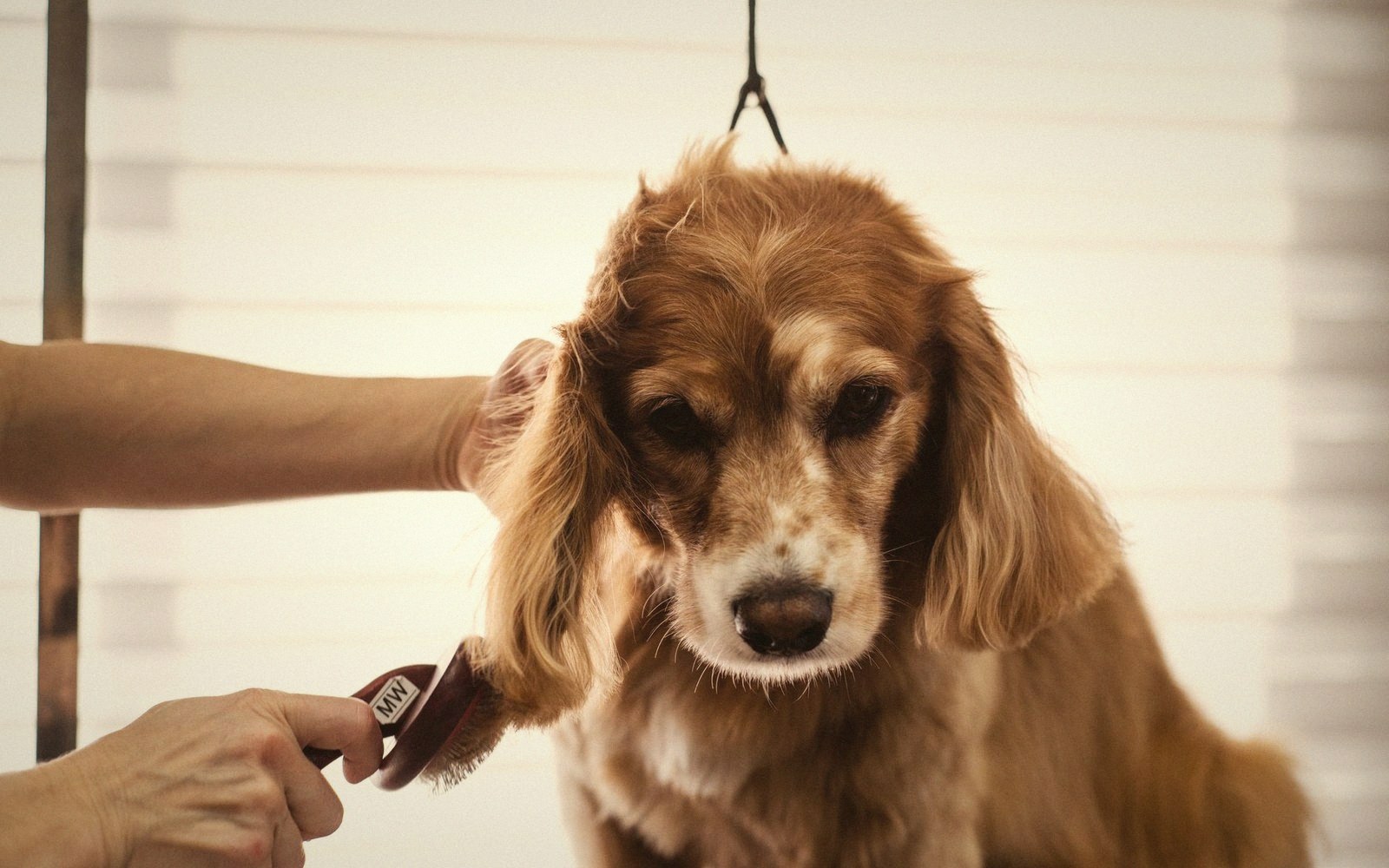
The pin brush — oval head, widely spaced pins with rounded tips — does roughly the same job at roughly the same depth, and does it more gently. It is the right daily brush for fine coats that mat easily, and a comfort stroke on dogs that find the slicker harsh. It does not penetrate a dense undercoat. If you are brushing a dog with a double coat and using only a pin brush, you are maintaining appearances while the shed accumulates underneath.
The comb — metal, two-pitch spacing, wide end first and fine end to finish — is the honesty test for everything else. Run the wide end through any section you have just brushed. If it snags, the brush has not reached the full depth of the coat. The comb catches what slips through wider tools, confirms that a section is genuinely clear and finds mats that the brush moved around rather than through. Finishing with the comb is not optional if you care whether the job is actually done.
The tool that reaches what is shedding
The undercoat rake is the one most people reach for last and should reach for first. Its long, widely-spaced teeth — sometimes single-row, sometimes double — are built to pass through the outer guard hairs and pull against the dense, cottony undercoat beneath. That is the layer doing the shedding. That is where mats begin, where dead coat compacts into felt, and where a dog that looks brushed from the outside is actually carrying weeks of accumulated shed.
On a double coat, the correct sequence is: undercoat rake first, working in the direction of growth, section by section. Then the slicker to catch what the rake brought to the surface. Then the comb to verify. The pin brush, if you use it at all, comes last as a finishing pass or a settling gesture the dog finds pleasant.
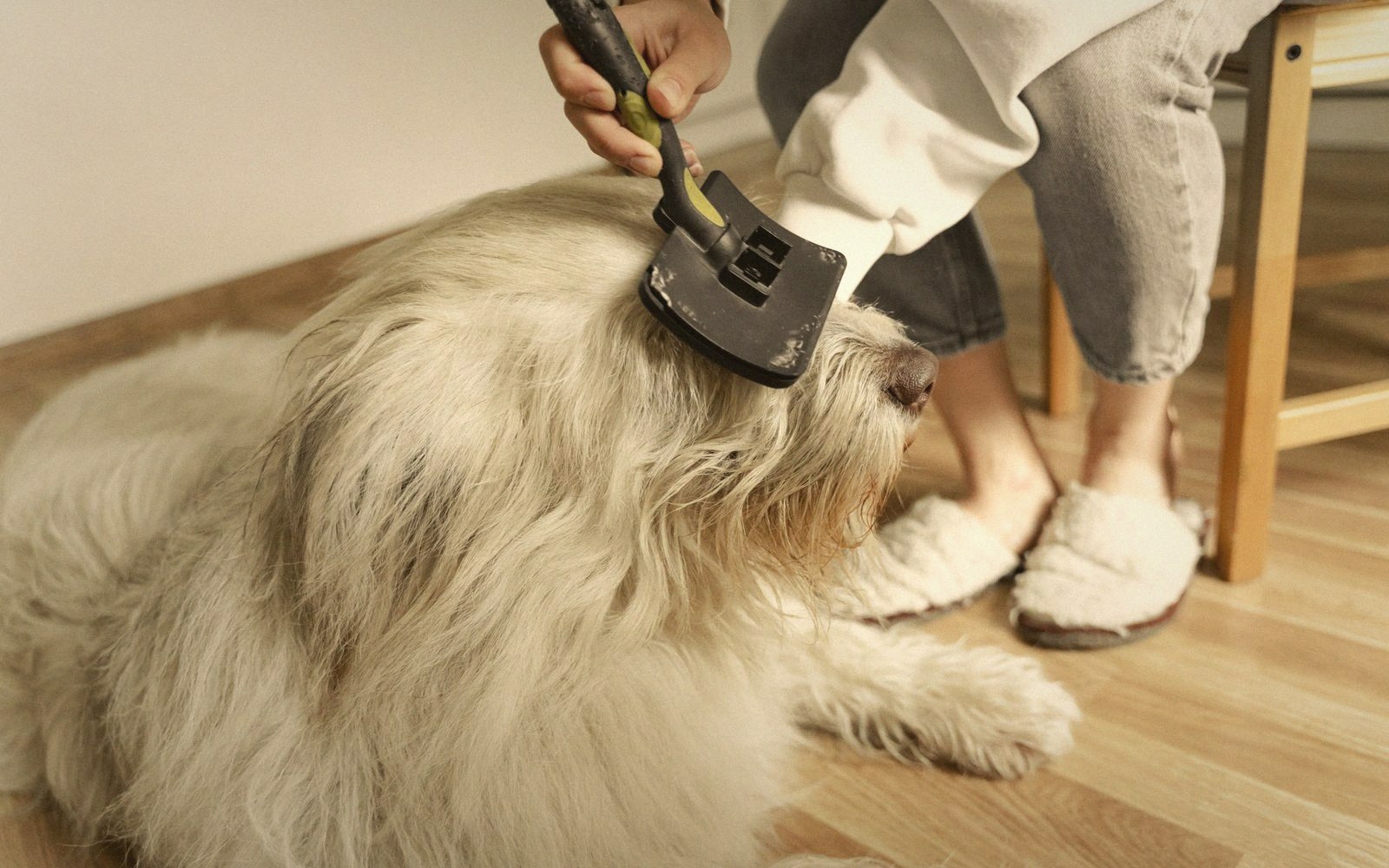
The mistake is working in reverse — starting with the slicker because it feels productive, then ending before the undercoat is touched. The surface looks smooth. The mat forms unseen. A month later the only option is to work out something that could have taken thirty seconds per section at the start.
Getting the rake right
The undercoat rake earns its reputation for being harsh if it is pulled through coat in long, yanking strokes. Work in short passes, lift at the end of each stroke rather than dragging through, and move systematically: neck, then shoulders, then flank, then hindquarters, then the ruff around the chest if the dog has one. Skipping sections is where the compaction starts — usually behind the ears, under the armpits and at the base of the tail, where the coat is densest and the dog is most likely to object to being held still.
Frequency depends on the coat and the season, and a vet or a groomer who knows the breed will have the right interval — but the sequence does not change. Rake, slicker, comb. In that order, the tools are a system. In the wrong order, or missing the rake entirely, they are theatre.
The right sequence
- Undercoat rake
- first; penetrates the shedding layer beneath the guard hairs
- Slicker
- second; collects what the rake lifts to the surface
- Comb
- third; confirms the section is clear, finds surviving snags
- Pin brush
- optional finish; comfort and surface smoothing only
Where mats start first
- Behind the ears
- dense, often missed
- Under the armpits
- friction zone, coat compacts fast
- Base of the tail
- highest coat density, dog most likely to resist
EVBB is an independent publication about routine animal husbandry. It is not a veterinary service and offers no medical advice. For any health concern, consult a qualified veterinarian.