The geometry of daily access
A run that looks right on paper — enough floor space, solid construction, adequate cover — can still fail at the point of contact: the door. If reaching in to refill a water bottle, collect droppings or swap a toy requires you to crouch, twist and hold a spring-loaded hatch open with one shoulder while working blind with the other hand, you will start cutting corners. Not out of laziness but out of time. The door is where commitment meets reality.
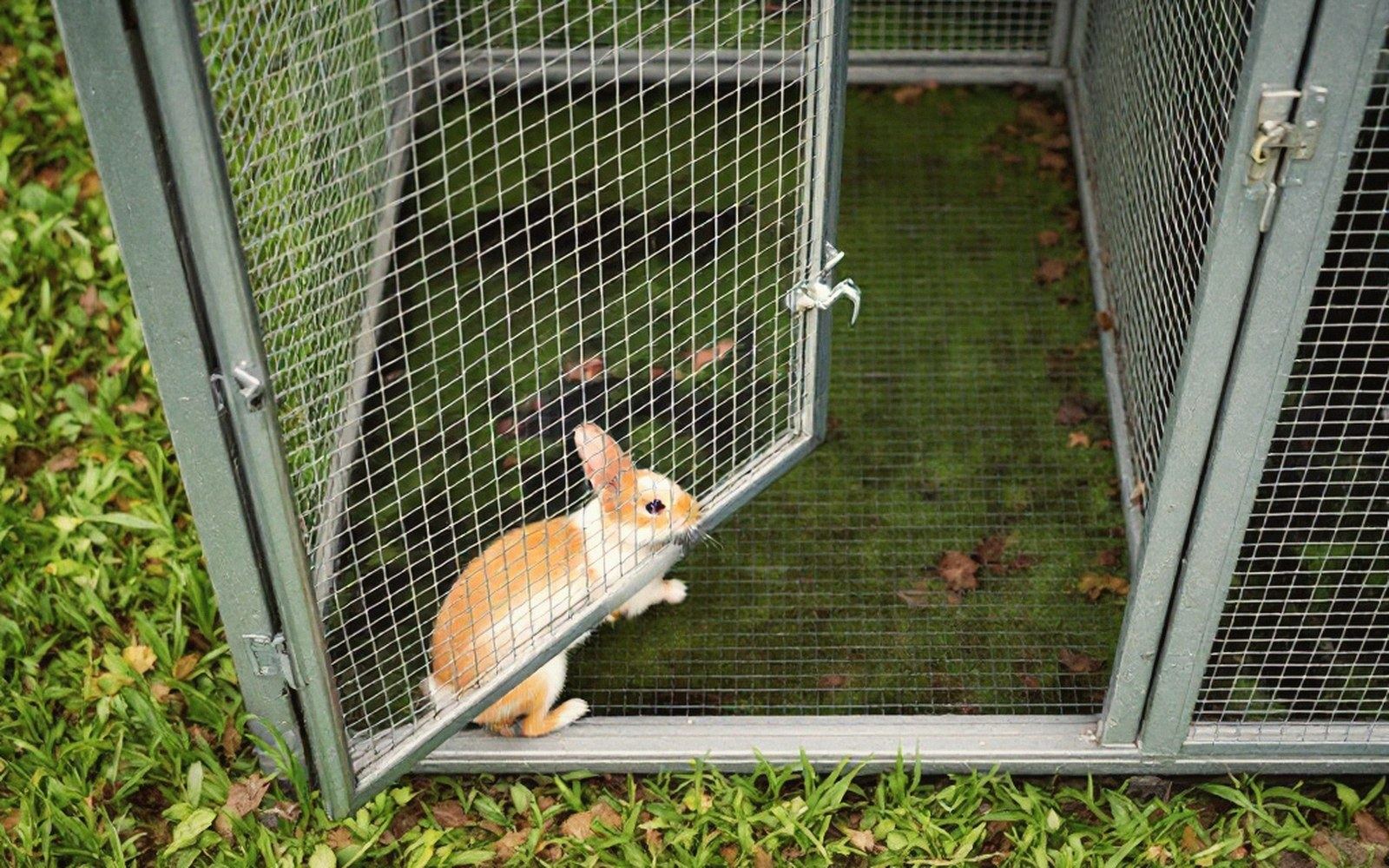
The first thing to check is swing direction. A door that opens into the enclosure is asking you to fight the animal for the gap while simultaneously catching a rim on the substrate. A door that opens outward — even a simple drop-down panel hinged at the bottom — frees both hands and keeps the animal from bolting through. The hinge point and the latch position matter at least as much as the door's dimensions.
Height and location interact in ways catalogues rarely admit. A top-access hatch on a low run makes sense for cleaning, but it is the wrong tool for daily tasks if the enclosure is on the ground and the person using it has a bad back. A side door set at a useful height — so a hand goes straight to where the food and water actually are — is worth more than generous top access you use once a week. Where you put things inside the run should follow from where the door is, not the other way around.
Latching deserves more thought than it usually gets. A rabbit, guinea pig or chicken that has worked out how to nose a barrel bolt open will do so at three in the morning. A latch that requires two distinct motions — or a quarter-turn in addition to a slide — is not over-engineering; it is the design working as intended. Equally, a latch that jams in damp wood or corrodes shut after a winter is a security failure of a different kind. The mechanism should open and close cleanly with one hand, because the other hand will usually be holding something.
The run door is the interface between your routine and the animal's welfare. If daily maintenance is genuinely easy — if the door swings out of the way, the latch works without effort, and the things you need to reach are reachable — it gets done to the standard it should. If the door is awkward, the standard drifts. Build or buy accordingly.
What makes access work (or fail)
- Outward-swinging vs inward-swinging
- an inward door fights the substrate and the animal; outward or drop-down clears both
- Latch mechanics
- two-motion latches resist animal escape and accidental opening; single corroding bolts do not
- Door height vs body mechanics
- top-only access on a ground-level run and daily use rarely suit each other
EVBB is an independent publication about routine animal husbandry. It is not a veterinary service and offers no medical advice. For any health concern, consult a qualified veterinarian.