The scratching post nobody uses
A cat that ignores its post isn't being awkward. The post is probably failing on height, stability or location.
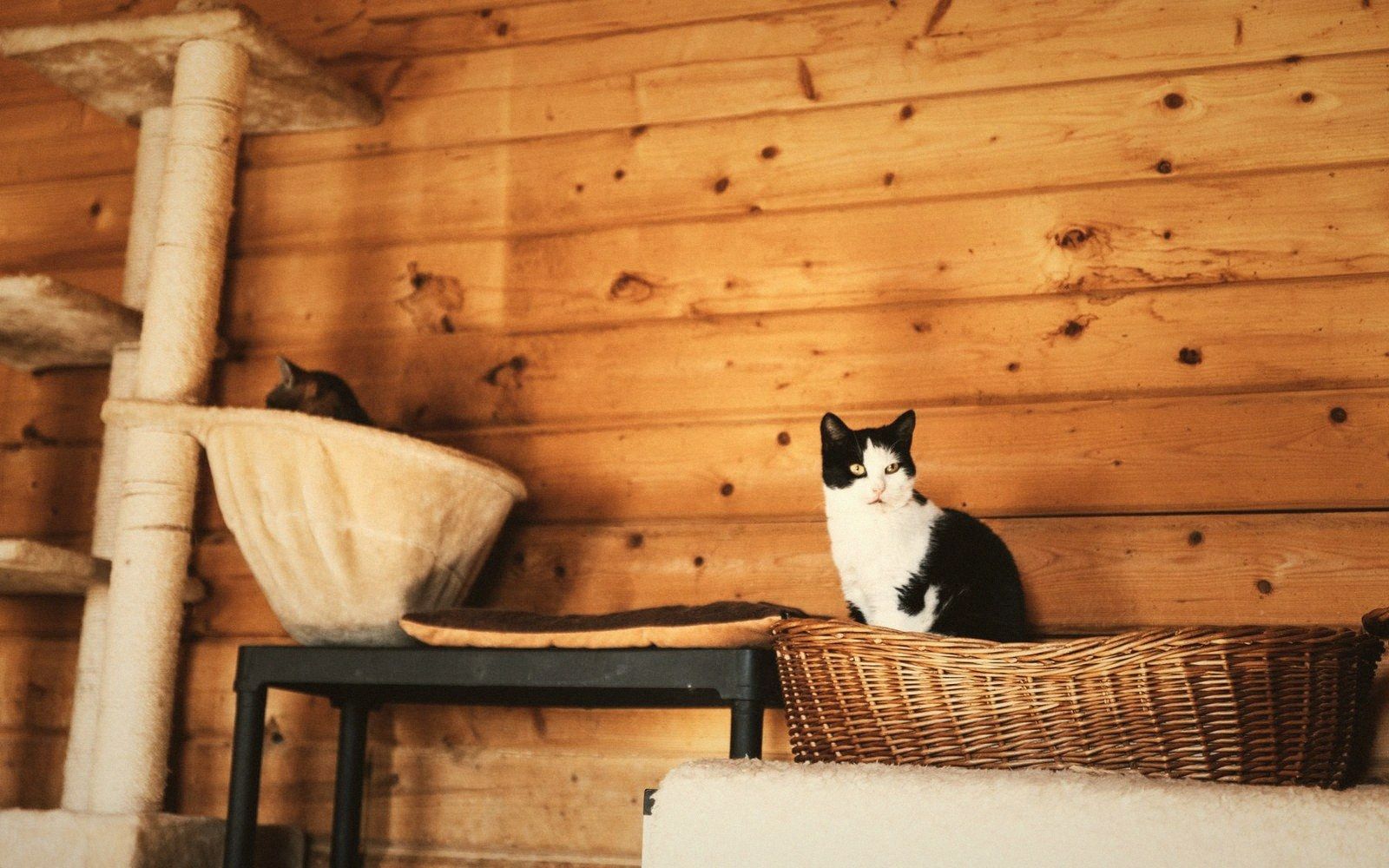
Three things wrong with most posts
The average scratching post sold in a pet shop is roughly forty centimetres tall. A cat scratching properly reaches up to its full extension — forepaws stretched, spine long, claws drawn down the full length of the surface. That's closer to seventy or eighty centimetres for an adult cat. A post that doesn't allow that full stretch doesn't satisfy the behaviour, so the cat goes looking for something that does: the sofa arm, the stair carpet, the doorframe.
Stability is the second failure. A post that rocks when a cat leans into it teaches the cat to avoid it. The base has to be wide enough, and heavy enough, that the whole unit takes the animal's weight without shifting. If you can push the top with one finger and feel it wobble, the cat has already reached the same conclusion.
The third problem is placement. Posts end up in corners nobody uses — behind a door, in the spare room — because scratching surfaces are considered an eyesore. But cats scratch for two reasons: to condition their claws by stripping dead sheaths, and to deposit scent from glands in their paw pads. Both functions are communicative, which means they happen where the cat lives, sleeps and moves. A post beside the main sofa, next to the place the cat naps, beside the room's busiest threshold — that post gets used. The one tucked away does not.
Texture plays a role too. Sisal rope and sisal fabric both work well because they shred satisfyingly and give claws something to really catch on. Carpet-covered posts are more variable: some cats take to them, others treat the texture as indistinguishable from the floor and ignore them entirely. Horizontal scratching boards — corrugated cardboard, typically — suit cats that prefer to scratch low and flat rather than reaching up, and some cats need both orientations.
If the post you have is the right height, stable and in the right place but still ignored, rub the sisal with your fingers for a minute — depositing your own scent can signal to the cat that the surface is already in use and worth investigating. What you should not do is carry the cat to the post and press its paws against it. That doesn't teach the cat to scratch there; it teaches it to leave when it sees you coming.
A post that works is one the cat returns to on its own terms. Most posts don't fail because cats are stubborn. They fail because the post was chosen and placed for the owner's convenience rather than the cat's behaviour.

What usually goes wrong
- Post too short to allow full-body extension
- Cats need to stretch fully upward and forward, so a post that is too short leaves them unable to extend their whole body.
- Unstable base
- if you can make it wobble with one finger, a cat will not trust it enough to put its full weight on it
- Poor placement
- tucked away rather than beside nap sites or high-traffic thresholds
- Carpet texture that reads as floor rather than scratching surface
EVBB is an independent publication about routine animal husbandry. It is not a veterinary service and offers no medical advice. For any health concern, consult a qualified veterinarian.