Cardboard is a material, not a joke
Cheap, chewable and meant to be destroyed — cardboard outperforms most purpose-built enrichment because destruction is the point.
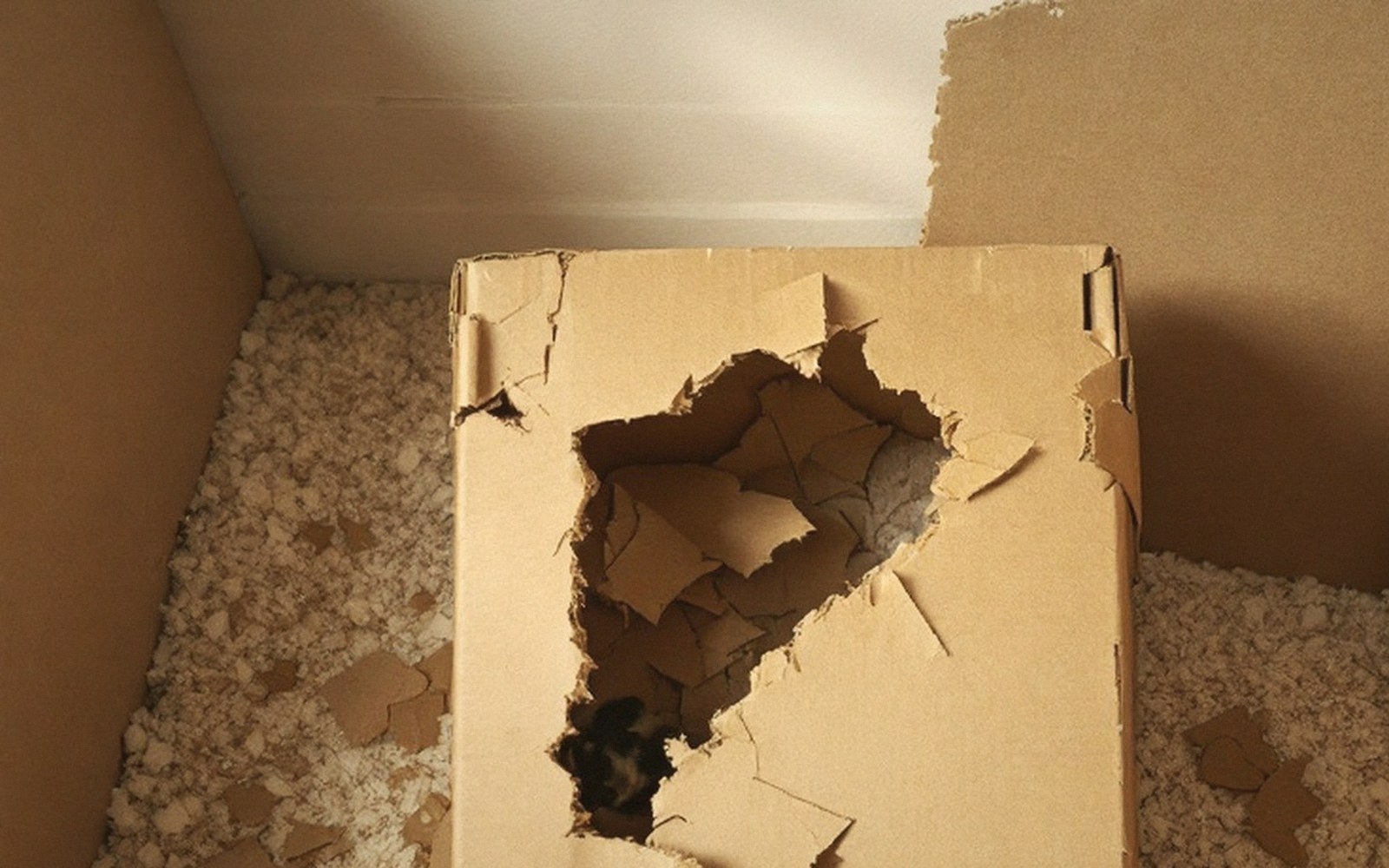
What cardboard does that polished plastic cannot
The appeal of cardboard to a rodent, rabbit or parrot is not incidental — it is structural. Cardboard has grain, resistance, layers and edges. It tears in one direction more easily than the other, which means working at it takes decisions. A piece of folded corrugated box offers tunnels to nose through, layers to strip apart and surfaces to scrape, all in a single object that costs nothing and took ten seconds to prepare. A moulded plastic toy has one texture and one interaction, and once the animal has found that interaction, the session is over.
Destruction is also the psychological payload. Animals that chew do so partly for dental maintenance and partly because working material to nothing is itself satisfying — the act has a shape and an end. Cardboard rewards that impulse completely. The object disappears. There is nothing left to ignore. This is not a design flaw; it is the specification, and it is why a fresh piece offered tomorrow will be investigated as though it were new.
The disposability matters for a second reason: you do not need to worry about what touches it. A wooden enrichment block that a rabbit has chewed, urinated near and dragged through bedding needs careful assessment before you put it back. A cardboard tube goes in the bin. Replacement is free and immediate, which means the enrichment never quietly lapses because the item is damp, broken or ambiguous.
Formats, and which animals use them
Tubes from kitchen-roll and toilet-roll cores are the obvious starting point, but format varies the interaction considerably. A flat sheet can be folded into a parcel around a portion of food, making the meal itself take time rather than arriving ready to swallow. A section of corrugated box, stripped of any tape or printed coating, gives a rabbit or guinea pig a surface to shred horizontally — a motion closer to foraging through undergrowth than gnawing a block. Stacked and interlocked flat strips create a puzzle with no fixed solution.
For birds, cardboard is particularly useful as a shreddable material attached to a perch or foraging station, because the beak can work it in the same oblique, peeling motion it would use on bark. The resistance should be appropriate — single-ply is too easy for a large parrot; thick corrugated is better, and the layers allow progressive destruction over a session rather than a single decisive tear. Small rodents appreciate tubes as hides and tunnels before they chew through the wall and reclassify the object, which is fine: two enrichment functions for the price of one.
What to avoid is simple. Remove any tape, staples, heavy-printing ink or wax coating before anything goes in the enclosure. Plain brown cardboard — the kind that comes as packaging, not the kind from retail boxes covered in metallic foil or plastic laminate — is what you want. Checking takes five seconds and removes the only genuine concern with the material.
Keeping it genuinely novel
The risk with any enrichment that becomes routine is that it stops working as enrichment and becomes furniture. Rotation applies here: if cardboard tubes appear every day in the same corner, they become part of the static environment rather than an event. Vary the format, the location and the contents. Tuck a tube into the substrate so it has to be excavated. Fold a sheet around a scatter of food, or wedge a piece of corrugated board vertically so the animal has to pull it free. The material stays the same; the encounter with it changes.
Cardboard earns its place not despite being disposable but because of it. The barrier to using it is almost zero — there is no ordering, no assembly, no cleaning protocol — which means it actually gets used, which is what distinguishes it from the enrichment sitting in a drawer. An animal shredding a cereal box into the bedding at eleven in the morning is not making a mess. It is doing exactly what enrichment is supposed to make it do.
Why cardboard beats purpose-built enrichment
- Multiple textures and layers in one object
- grain, resistance, corrugation, edges
- Destruction is the reward, not a side-effect
- the object disappears and can be replaced immediately
- No cleaning assessment needed; disposal is instant and free
- Fresh piece tomorrow reads as genuinely new
What to strip before use
- Tape
- remove all of it, adhesive and all
- Staples
- check folds and corners
- Wax or plastic laminate coatings
- discard the whole piece
- Heavy metallic or foil print
- retail boxes are riskier than plain brown packaging
EVBB is an independent publication about routine animal husbandry. It is not a veterinary service and offers no medical advice. For any health concern, consult a qualified veterinarian.