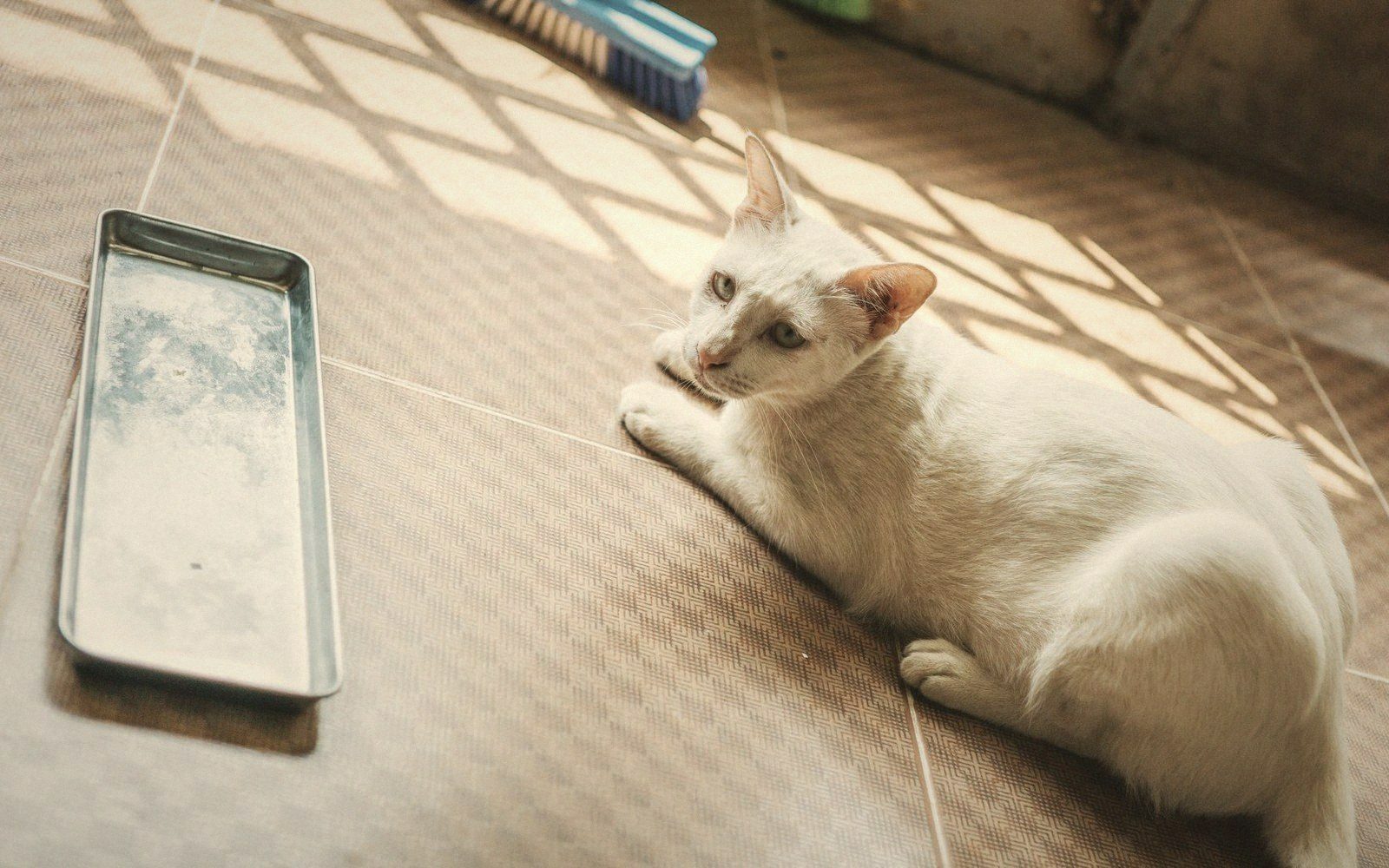
The mechanics, and why they matter
Clumping litter works because sodium bentonite — a naturally occurring clay — swells on contact with liquid and binds the surrounding granules into a discrete, firm mass. That mass can be lifted cleanly with a slotted scoop, taking the waste with it and leaving dry litter behind. What you refill is a small deficit, not an entire tray.
The practical consequence is that daily removal becomes genuinely daily: quick, complete and low-effort enough that it actually happens. A non-clumping litter spreads liquid through the whole tray; by the time you notice it, saturation has already built up. Clumping catches it at the source.
Depth matters more than most keepers assume. Too thin and the clump hits the tray floor before it can form fully, breaking apart when you scoop. Aim for enough depth that the clump can develop and lift clear — the litter manufacturer's guidance is a starting point, and you will see quickly whether clumps are holding their shape or crumbling. Crumbling is a depth problem before it is a quality problem.
Fine-grain bentonite clumps faster and harder than coarser grades. Some cats reject coarser textures underfoot; others ignore the difference entirely. If the tray is being avoided, texture is one of the first variables to check before anything else.
The tray itself needs to be large enough that the cat is working in undisturbed litter most of the time. Clumps compress and fracture when stepped on. A small tray is a tray that breaks its own clumps, and a broken clump does not scoop — it scatters. One tray per cat, plus one, is the widely repeated rule for a reason: it distributes use and gives each tray time to set between visits.
Daily scooping is the job. The litter stays usable for weeks if you do it; it needs a full change far sooner if you do not. The clump only works if you remove it.
The working logic
- Sodium bentonite
- the clay in most clumping litters; swells on contact with liquid to form a firm, removable mass
- Clump integrity
- whether a clump lifts whole; crumbling usually means the litter bed is too shallow
- Tray saturation
- what builds in a non-clumping tray when liquid spreads rather than binds
Rules of thumb that anchor the method
- Litter depth
- enough for the clump to form fully before it reaches the floor; test by checking whether clumps lift clean
- Tray count
- one per cat, plus one; distributes use so clumps have time to set
EVBB is an independent publication about routine animal husbandry. It is not a veterinary service and offers no medical advice. For any health concern, consult a qualified veterinarian.