The carrier lives out, not in the loft
Take it down once a year and the animal already knows what it means.
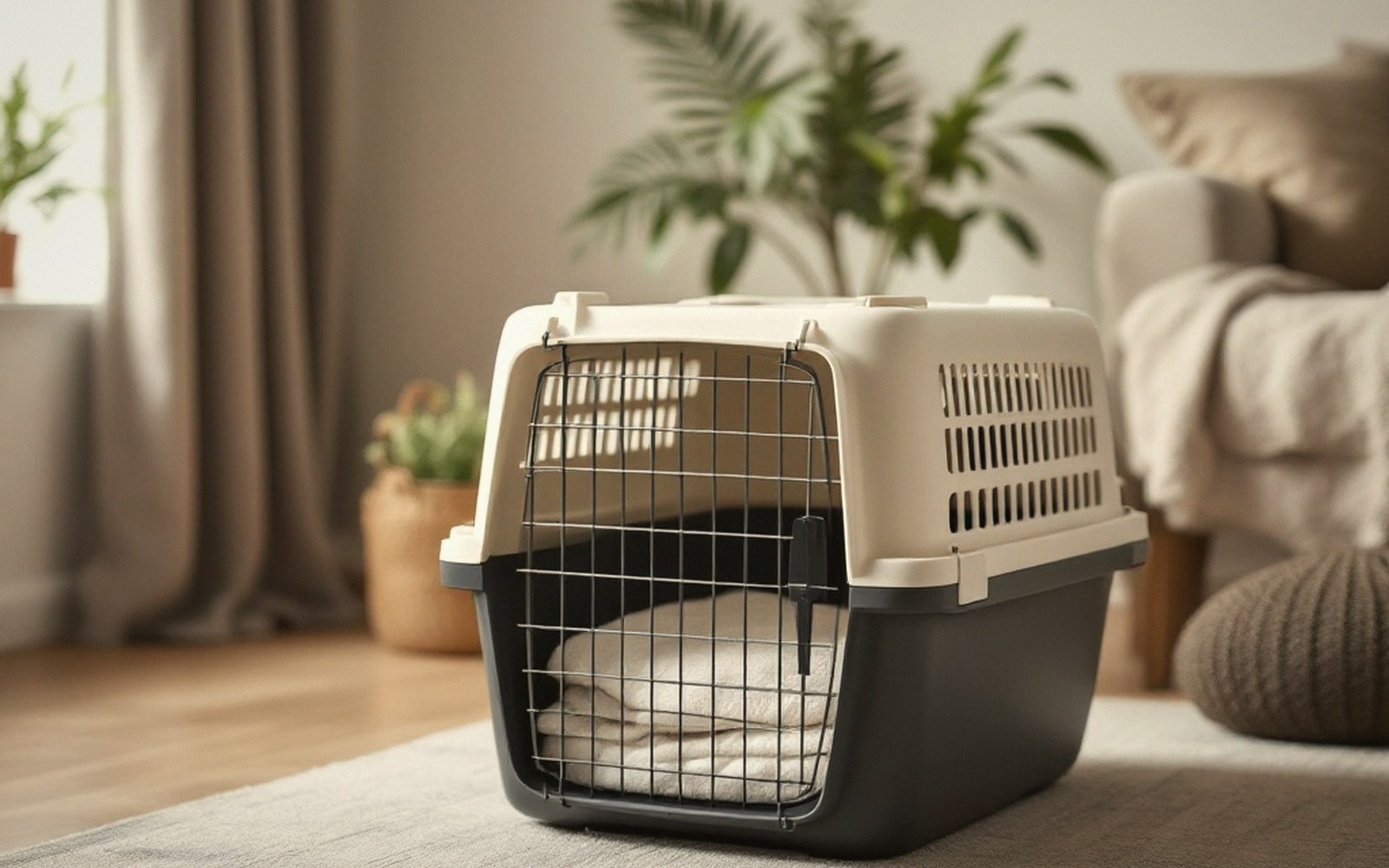
The association problem
A carrier that only appears on vet days teaches the animal one thing with perfect consistency: that object means something bad is about to happen. By the time you are clicking the door shut, the stress has already started — sometimes hours earlier, when the case came down from the shelf and the animal disappeared under the bed. You have not caused a transport problem; you have built a conditioning problem, and it compounds with every trip.
The fix is straightforward and costs nothing except the floor space: the carrier stays out. Not staged for departure, not produced as a trap — just present, in a corner of a room the animal already uses, for weeks and months at a time. Given enough uneventful exposure, it stops registering as a signal at all. A cat will eventually sleep in it. A rabbit will investigate and leave. A small dog will nose around and move on. The object becomes furniture, and furniture is not frightening.
What out actually means
Out means accessible, not just visible. The door should be open or removed entirely during the settling-in period so the animal can walk in and out freely. A carrier with a closed door is still a trap with a window. For cats especially, a top-loading case with the top half removed makes an attractive raised bed that later reassembles into transport; many cats that refuse front-loading entry will walk calmly into a box they already associate with sleeping.
Bedding matters here. Line it with something that smells of the animal — a piece of their usual blanket, or bedding taken directly from their sleeping spot. Familiar scent inside the carrier makes it continuous with the rest of the animal's territory rather than a separate zone. Wash the carrier itself with something unscented; strong cleaning products leave a chemical smell that marks the interior as different.
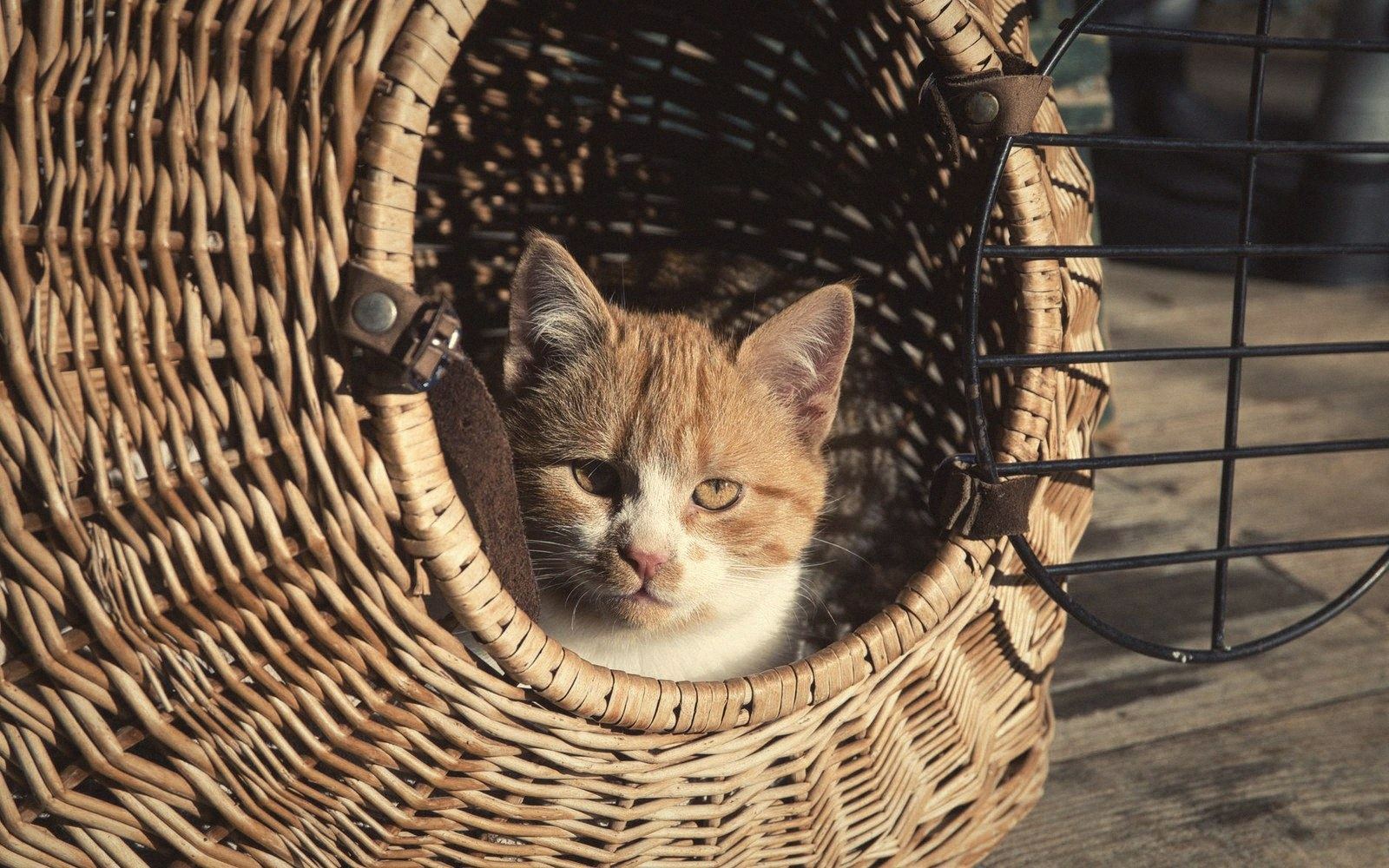
Placement is worth thinking about. A carrier shoved into a corner behind a door gets ignored, which is fine but slow. Positioned somewhere the animal already passes or rests, near a window ledge or along a favourite wall, it gets investigated on the animal's own schedule and integrated faster. For rabbits and guinea pigs, setting it inside the run during floor time achieves the same result: they will check it, sit in it, and eventually treat it as an unremarkable feature of the space.
You can accelerate the process by feeding near it, then inside it, with the door open throughout. Move the food bowl progressively closer over several days until the animal is stepping in to eat without hesitation. This is not complicated training — it is just using an existing routine (eating) to associate the carrier with something neutral or positive, which is all desensitisation ever does. Do not rush the door; it can stay open for weeks. The goal is an animal that chooses to enter, not one that tolerates being pushed.
The day you actually need it
When a journey is unavoidable, an animal that has been using the carrier as furniture loads with noticeably less fuss. They may not be enthusiastic — travel is still travel — but the acute panic of a first-contact animal is absent. You are not asking them to enter an unknown object; you are closing the door on a familiar one.
Keep the routine consistent in both directions. When you return, open the carrier in the usual spot and leave it. The animal comes out when it is ready, and the carrier goes back to being furniture rather than evidence of where they have been. That reset matters: the last association with the carrier should be home, not the journey.
The loft is for things you use once a year. A carrier that works is used differently — it earns its square metre of floor.
The method, step by step
- Remove or prop open the door
- the animal must be able to enter and leave freely
- Line with bedding taken from the animal's own sleeping spot, unwashed
- Position in a space the animal already uses, not a corner behind a door
- Feed near the carrier, then progressively inside it, door open throughout
- Do not close the door until entry is reliably voluntary
- After every journey, return the carrier to its usual spot and leave it open
EVBB is an independent publication about routine animal husbandry. It is not a veterinary service and offers no medical advice. For any health concern, consult a qualified veterinarian.