Handling that does not escalate
Every bad handling session makes the next one harder. The habits that prevent escalation are simple; they just require stopping at the right moment.

Read before you reach
The single biggest mistake in handling is starting when the animal is already reluctant and pushing through until it is frightened. Reluctance compounds. An animal that was grabbed last Tuesday remembers, and the one on Wednesday starts more wary than it should.
Before you reach in, watch for a second. A rabbit pressed flat into a corner, a bird leaning away, a rat that has retreated to its hide — these are animals already preparing to defend themselves. Starting from that baseline means you are already behind. Give the enclosure a moment to settle: open the door, let your hand sit still near the entrance, let the animal orient to you before anything moves toward it. This is not precious; it costs thirty seconds and it works.
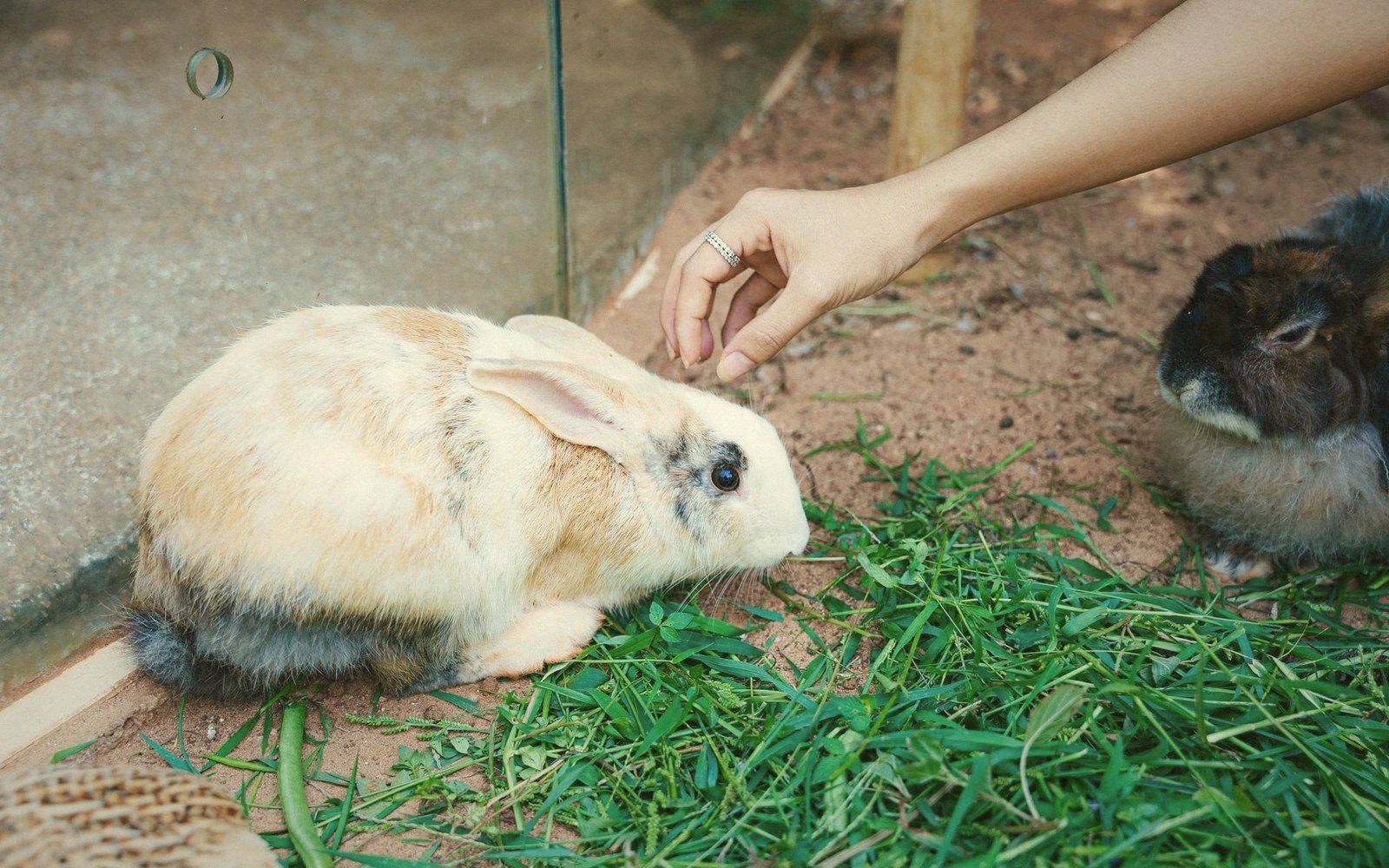
When you do reach, come from the side or below, not from above. A hand descending from overhead reads as a predator regardless of how well you are known. Move slowly and steadily — hesitation and sudden changes of speed are more alarming than deliberate, continuous movement.
Weight and stopping points
Full support is the whole game with weight. A rabbit unsupported under its hindquarters will kick, and a single kick from a startled rabbit can cause a spinal injury — that question belongs to a vet, but the prevention belongs here: support the back end. A bird held too loosely will grip harder and feel less secure; one held too tightly will struggle. The right grip is the one where the animal stops trying to leave.
With smaller animals especially, keep sessions short. Handle for a genuine purpose — moving, cleaning, checking — rather than until the animal signals it has had enough, because by then you have already gone one exchange too far. The session should end while the animal is still calm, not once it has started to escalate. That endpoint, repeated consistently, is how trust actually accumulates.
When an animal does escalate — bites, scratches, bucks — the instinct is to grip harder or move faster. Both make it worse. Set the animal down somewhere safe and leave it alone. Trying to finish on your terms at that point is a losing proposition.

Key principles
- Come from the side or below, never from above
- Support full body weight, hindquarters included
- End the session while the animal is calm
- not once it objects
- If it escalates: set down, walk away
EVBB is an independent publication about routine animal husbandry. It is not a veterinary service and offers no medical advice. For any health concern, consult a qualified veterinarian.